Blogs

How Proper Pool Water Balance Protects
Your Robotic Pool Cleaner.
Maintaining proper water balance isn’t just important for swimmer comfort and pool health it also protects your robotic pool cleaner. Unbalanced water, particularly with high chlorine or low pH, can accelerate wear on seals, motors, and plastic components, leading to costly repairs or reduced lifespan. Keeping your water chemistry in check helps your robot run efficiently and last longer, saving you time and money in the long run.
Robotic Pool Cleaners vs. Suction Cleaners: Which Is Right for Your Pool?
When it comes to keeping your pool clean, choosing the right cleaner can make all the difference in efficiency, energy savings, and overall performance. Two of the most common types of automatic pool cleaners on the market are robotic pool cleaners and suction cleaners, but they operate very differently and suit different needs.

Say Hello to Cordless Cleaning Meet the Dolphin Liberty 400!
The same unmatched Dolphin performance – now cordless!
Discover the Maytronics Dolphin Liberty 400, with its new cordless design for unmatched agility and inductive charging. The ‘Eco Mode’ will keep your pool clean all week with short and efficient pool floor cleaning cycles, while the ‘Cycle Selector’ will let you choose between floor-only, floor-and-wall cleaning, or ultra-clean mode.
Why Correct Water Balance Matters, Especially for Your Robotic Pool Cleaner
Keeping your pool water balanced isn’t just about swimmer comfort and safety. It also plays a big role in protecting your pool equipment, especially your robotic cleaner. These machines are built to make pool maintenance easier, but poor water chemistry can damage them over time. Without regular testing and the right chemical levels, even the best cleaners can wear out early. Two of the biggest risks are high chlorine and low pH. Too much chlorine can corrode plastic parts, rubber tracks, seals, and even the internal motors and electronics. Low pH, meaning the water is too acidic, can eat away at metal components, cause cracks, and weaken important structural parts. These chemical imbalances can lead to reduced cleaning performance, breakdowns, and expensive repairs. Most manufacturers also require your pool water to stay within specific chemical ranges, usually 1.0 to 4.0 ppm chlorine and a pH between 7.2 and 7.6, in order to keep the warranty valid. Many pool owners forget to test water during winter, but it’s just as important. Even when the pool isn’t being used, rain, debris, and temperature changes can throw the water chemistry off. If your cleaner runs during this time, it may be exposed to damaging conditions. Testing your water every two weeks, or more often in summer, helps catch problems early. Maintaining proper water balance helps protect your entire pool system. It cuts down on corrosion, scale, algae, and staining. More importantly, it keeps your robotic cleaner running smoothly for years to come. A few minutes of water testing can save you hundreds of dollars in repairs or replacements. Treat your water with care all year round, and your equipment will thank you.
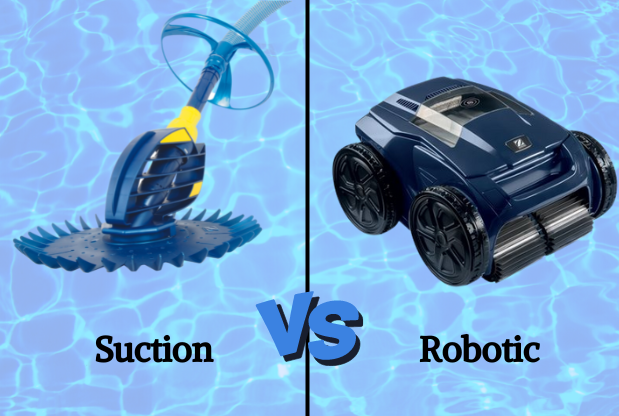
Robotic Pool Cleaners vs. Suction Cleaners: Which Is Right for Your Pool?
Let’s break down the key differences to help you decide which is best for your pool.
How They Work
Suction cleaners connect directly to your pool’s filtration system via the skimmer or a dedicated suction line. They move randomly around the pool, vacuuming up debris while relying on your pool pump and filter for suction.
Robotic pool cleaners are independent machines powered by electricity. They contain their own filter system and use smart navigation to efficiently map and clean the pool, including the floor, walls, and waterline.
Energy Efficiency
Since they run off your pool’s pump, suction cleaners can use a lot of energy, especially if your pump is older or oversized.
Robotic cleaners use low-voltage power and are far more energy efficient. Many models can run for just a few cents per hour.
Cleaning Performance
Suction cleaners are better suited for light to moderate debris. Their random movement often means they miss spots or need longer run times to get full coverage.
With intelligent scanning technology, robotic cleaners provide thorough and consistent cleaning. They can handle fine particles, leaves, sand, and even algae with ease.
Maintenance and Wear
Because they rely on your pool’s filter system, suction cleaners increase wear and tear on your pump and filter. This may lead to more frequent maintenance.
Robotic cleaners operate independently, reducing strain on your pool equipment. Most have easy-access filter cartridges that can be rinsed out in seconds.
Cost Comparison
Suction cleaners are generally cheaper to purchase initially, making them attractive for smaller budgets.
While robotic cleaners cost more upfront, they save money over time through lower power use, less maintenance, and longer lifespans.
Convenience and Features
Suction cleaners are basic models with limited programmability. They have no built-in filtration or smart features.
Many robotic cleaners come with Bluetooth or WiFi control, scheduled cleaning cycles, and automatic shut-off. Just plug them in, drop them in the pool, and walk away.
So, Which One Is Right for You?
If you’re after a low-cost, entry-level solution and don’t mind a bit of hands-on pool care, a suction cleaner might get the job done.
But if you want powerful, hassle-free cleaning with smart features and energy savings, a robotic pool cleaner is the clear winner. This is especially true for busy pool owners, larger pools, or those dealing with tough debris.
Ideal Pool Size
The Dolphin LIBERTY 400 is designed for pools up to 10 metres in length, making it perfect for small to medium-sized residential pools.
Cleaning Coverage
This robot handles floor, walls cleaning, ensuring your entire pool stays sparkling clean with every cycle.
Cleaning Cycle
The cleaning cycle runs for up to 2.5 hours, giving the robot plenty of time to thoroughly scrub and filter your pool water.
Battery Power
Powered by a 5,000 mAh lithium-ion battery, the LIBERTY 400 offers strong and reliable cordless performance for uninterrupted cleaning.
App Control
With Bluetooth connectivity and access to the MyDolphin™ Plus app, you can choose cleaning cycles and control the robot from your smartphone.
Smart Navigation
The LIBERTY 400 uses CleverClean™ coverage, an intelligent navigation system that maps out your pool and ensures complete, efficient cleaning without missing a spot.
Advanced Filtration
Includes an easy-clean filter basket with extra sealing and interchangeable ultra-fine and fine filters, so you can customize debris capture based on your pool’s needs.
Cordless Charging
Say goodbye to tangled cords. The LIBERTY 400 uses inductive ‘Magnetic Connect’ charging just click it into place and walk away.
Warranty
The unit comes with a generous 3-year warranty, giving you peace of mind with your investment.